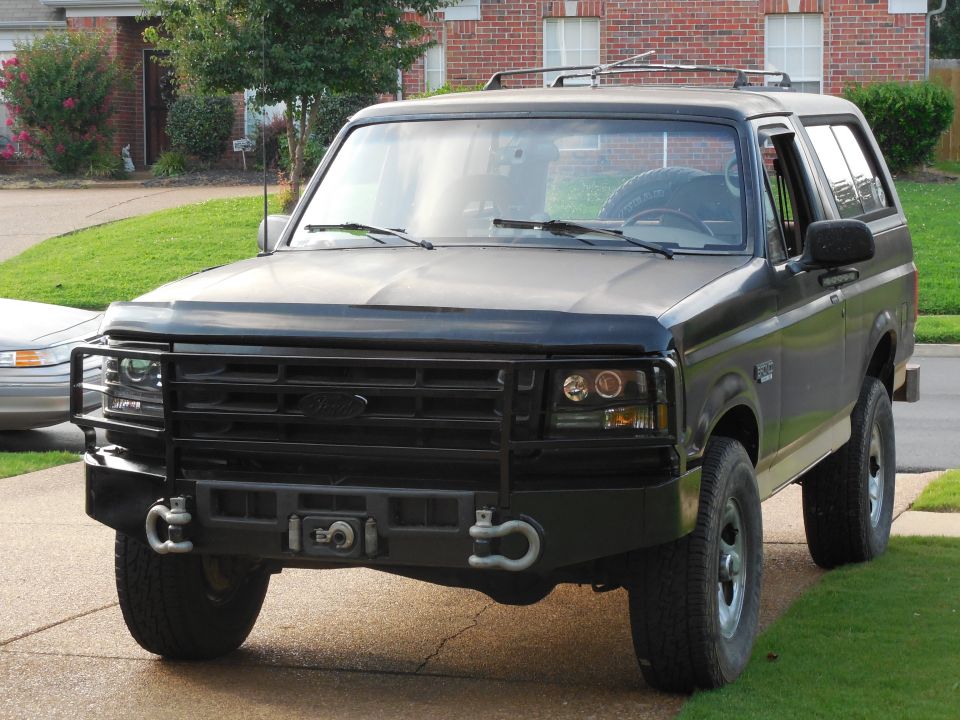
The third-generation Ford Bronco ran from 1980 to 1986 on Ford's redesigned 1980-1986 F-series chassis, the body enthusiasts call the "Bullnose" for its flat, forward-leaning front end and recessed grille. Ford rebodied the full-size Bronco to cut weight and improve fuel economy after the 1979 energy crisis, and the headline chassis change was the Twin-Traction Beam (TTB) front suspension, an independent setup using a Dana 44 front axle split into two swinging beams. The engine roster covered the 300 cubic-inch (4.9L) inline-six and the 302 (5.0L) V8, plus an optional 5.8L V8 that changed identity early in the run: for 1980-1981 it was the 351M, a member of Ford's 335-series ("Cleveland"/M-block) family carried over from the prior generation, replaced by the lighter 351 Windsor for 1982, which then served as the top V8 for the rest of the generation. The early years leaned on smaller, economy-tuned options. Trims spanned the base Custom and the XLT, with the Eddie Bauer package joining for 1985. Around the 1985 model year the 5.0L (302) V8 picked up Ford throttle-body fuel injection (CFI), while the 5.8L (351 Windsor) stayed carbureted through the end of this generation. All seven model years used the same 104.7-inch wheelbase and removable rear hardtop.
At a glance
- Years: 1980-1986 (third generation, "Bullnose")
- Body: two-door full-size SUV on the 1980-1986 F-series chassis, removable fiberglass rear hardtop
- Engines: 300 cu in (4.9L) inline-six; 302 (5.0L) V8; optional 5.8L V8 (351M (335-series) for 1980-1981, replaced by the 351 Windsor for 1982)
- Front suspension: Twin-Traction Beam (TTB) independent, Dana 44 front axle
- Rear axle: Ford 9-inch semi-floating live axle, leaf-sprung (Ford 8.8-inch phased in toward the end of the generation, about 1986, and standard for 1987)
- Transmissions: 4-speed manual and 3-speed automatic; transfer case for four-wheel drive
- Trims: Custom, XLT; Eddie Bauer from 1985
- Wheelbase: 104.7 inches (all years)
Year-by-year changes
| Year | Engines | Drivetrain & suspension | Notable changes |
|---|---|---|---|
| 1980 | 300 cu in (4.9L) six; 302 (5.0L) V8 (returns as base V8); optional 351M (335-series) (5.8L) V8 | New Twin-Traction Beam independent front suspension with Dana 44 axle; rear leaf-sprung live axle | Full redesign onto the Bullnose F-series body; lighter structure aimed at fuel economy after the 1979 fuel crisis; 400 V8 dropped after 1979, optional big V8 is the carried-over 351M |
| 1981 | 300 six; 302 V8; optional 351M (335-series) (5.8L) V8 | TTB front, Dana 44 front axle; 4-speed manual or automatic | Carryover year refining the 1980 redesign, continued economy focus; optional big V8 still the 351M |
| 1982 | 300 six; 302 V8; 351 (5.8L) Windsor V8 (replacing the 351M) | TTB front; four-wheel-drive transfer case | Optional 5.8L switches from the discontinued 351M (335-series) to the lighter 351 Windsor, which becomes the top engine option for the rest of the generation; revised Ford front-end styling and the Blue Oval grille emblem era |
| 1983 | 300 six; 302 V8; 351 (5.8L) Windsor V8 | TTB front, Dana 44; manual and automatic transmissions | Mid-generation engine availability; a 351 High Output (HO) version of the 5.8L Windsor appeared around the mid-1980s |
| 1984 | 300 six; 302 V8; 351 V8 | TTB front; four-wheel drive | Carryover year; the separate compact Bronco II launched alongside but is a different Ranger-based model, not this full-size Bronco |
| 1985 | 300 six; 302 (5.0L) V8 with throttle-body injection (CFI); 351 (5.8L) carbureted V8 | TTB front, Dana 44; automatic and manual options | Eddie Bauer trim package introduced; the 5.0L V8 adopted Ford throttle-body fuel injection (CFI) while the 5.8L stayed carbureted |
| 1986 | 300 six; 302 (5.0L) V8 with throttle-body injection (CFI); 351 (5.8L) carbureted V8 | TTB front; four-wheel-drive transfer case | Final year of the Bullnose body before the 1987 Bricknose redesign; the 5.0L V8 ran CFI, the 5.8L remained carbureted; Ford began phasing in the lighter Ford 8.8-inch rear axle around 1986, which became standard for 1987 |
Engines and drivetrain
The third-generation Bronco (1980-1986) offered three engine families across its run. The base engine was the 300 cubic-inch (4.9L) Ford inline-six, a long-stroke, torque-oriented motor known for durability rather than power. Above it sat the 302 (5.0L) Windsor V8 and an optional 5.8L V8 whose identity changed early in the run. For 1980-1981 the optional 5.8L was the 351M, a member of Ford's 335-series ("Cleveland"/M-block) family carried over from the prior generation; the 400 V8 was dropped after 1979 and the 302 returned as the base V8 for 1980. The 335-series 351M was discontinued around 1982, with the Bronco and F-series among its last homes, and the lighter 351 Windsor (5.8L) replaced it for 1982, continuing as the top V8 for the rest of the generation. Ford tuned the early 1980-1981 trucks for fuel economy in the wake of the 1979 energy crisis. Around the mid-1980s Ford offered a 351 High Output (HO) version of the 5.8L Windsor. Around the 1985 model year the 5.0L (302) gained Ford throttle-body fuel injection (CFI), the same direction the F-series trucks were heading, while the 5.8L (351 Windsor) stayed carbureted through the end of this generation and did not get EFI until the following 1987-1991 trucks. Transmissions were 4-speed manuals and 3-speed automatics depending on engine and year, feeding a transfer case for four-wheel drive.
What is Twin-Traction Beam, and why does it matter?
Twin-Traction Beam (TTB) was the defining chassis change of the 1980-1986 Bronco. Earlier full-size Broncos (1978-1979) used a solid front axle on leaf springs; for the 1980 redesign Ford split the front Dana 44 into two long swinging beams, each pivoting independently, with coil springs and radius arms. The result is an independent-front-suspension feel that improves on-road ride and handling compared with a solid axle, while still using axle-style hardware. TTB comes with tradeoffs that enthusiasts still debate: it rides better than a solid axle but complicates lift kits and alignment because camber changes as each beam travels. The system carried forward into later Ford trucks, so the 1980-1986 Bronco is where this distinctive Ford geometry first appeared under the full-size Bronco.
Axles, suspension, and four-wheel drive
The 1980-1986 Bronco used a Dana 44 front axle within the Twin-Traction Beam layout, with coil springs and radius arms locating the front beams. The rear was a Ford 9-inch semi-floating live axle on leaf springs for most of the generation, though around 1986 Ford began phasing in the smaller, lighter Ford 8.8-inch rear axle across its half-ton trucks, and the 8.8-inch became the standard rear axle for the following 1987 generation. Four-wheel drive was handled through a transfer case, with manual locking front hubs typical of the era. Because the front is independent rather than a single solid tube, the third-generation Bronco behaves differently off-road and on the lift-kit market than the solid-axle first- and second-generation trucks. Buyers cross-shopping vintage Broncos should know that the 1980-1986 TTB front end is the dividing line between the older solid-axle full-size Broncos (1978-1979) and this redesigned chassis.
Body, trims, and identifying the Bullnose
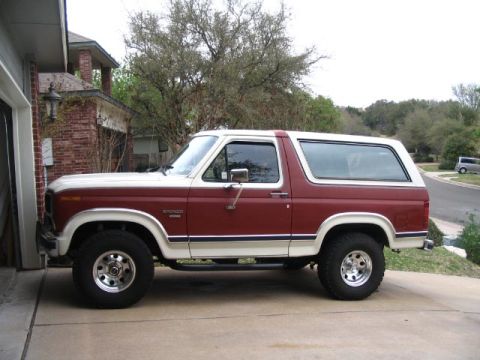
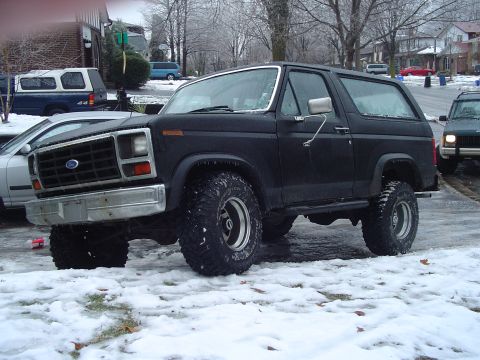
The third-generation Bronco (1980-1986) shares its cab and front sheet metal with the 1980-1986 F-series pickups, the styling generation enthusiasts call "Bullnose" for its flat, slightly forward-leaning nose and recessed grille. It remained a two-door full-size SUV with a removable fiberglass rear hardtop over the cargo area and a single 104.7-inch wheelbase. Trim levels ran from the base Custom up through XLT, and Ford added the Eddie Bauer package for 1985, bringing two-tone paint and upgraded interior trim. Do not confuse this truck with the compact Bronco II that launched for 1984: the Bronco II is a separate, smaller model built on the Ranger platform with a V6, not a full-size Bronco.
What to know when buying a 1980-1986 Bronco
Shoppers looking at a third-generation Bronco (1980-1986) should verify the engine, since the 300 six, 302, and 351 differ greatly in power, and confirm whether a 5.0L example is carbureted or one of the later throttle-body fuel-injected (CFI) trucks, since the 5.8L stayed carbureted throughout, which affects parts and tuning. The Twin-Traction Beam front end is the key inspection item: check for worn radius-arm bushings, ball joints, and the camber/alignment behavior that TTB introduces, and be aware that lift kits for TTB trucks differ from solid-axle kits. As with most full-size Fords of the era, body and frame rust around the rear quarters, rockers, and tailgate is the common structural concern. The removable hardtop and its seals are worth checking for leaks and corrosion.
Frequently asked questions
What years is the third-generation Ford Bronco?
The third-generation Ford Bronco was built from 1980 to 1986. It rode on Ford's redesigned 1980-1986 F-series chassis, the body enthusiasts call "Bullnose," and it replaced the 1978-1979 second-generation "Dentside" Bronco. It was succeeded by the 1987-1991 fourth-generation "Bricknose" Bronco.
What is the Twin-Traction Beam front suspension on the 1980-1986 Bronco?
Twin-Traction Beam (TTB) is the independent front suspension Ford introduced on the 1980 Bronco. It splits a Dana 44 front axle into two long swinging beams that pivot independently, sprung by coils and located by radius arms. It improves on-road ride over a solid axle but changes camber through suspension travel, which complicates alignment and lift kits.
What engines did the third-generation Bronco use?
The 1980-1986 Bronco offered the 300 cubic-inch (4.9L) inline-six as the base engine, plus the 302 (5.0L) V8 and an optional 5.8L V8. For 1980-1981 the optional 5.8L was the 351M (335-series), carried over from the prior generation; it was replaced by the lighter 351 Windsor (5.8L) for 1982, which served as the top V8 for the rest of the run. A 351 High Output version of the Windsor appeared around the mid-1980s, and around the 1985 model year the 5.0L V8 adopted Ford throttle-body fuel injection (CFI) while the 5.8L stayed carbureted through this generation.
Is the Bronco II the same as the 1980-1986 Bronco?
No. The Bronco II (1984-1990) is a separate compact SUV built on the Ford Ranger platform with a Cologne V6, not the full-size Bronco. The third-generation full-size Bronco (1980-1986) is a larger, two-door truck sharing its body with the F-series pickups.
What is the difference between the Bullnose Bronco and the earlier full-size Broncos?
The 1980-1986 "Bullnose" Bronco uses a redesigned, lighter F-series body and a Twin-Traction Beam independent front suspension. The earlier 1978-1979 "Dentside" full-size Bronco used a solid front axle on leaf springs. The TTB front end is the clearest mechanical dividing line between the two.
Sources
- Ford factory shop manuals and parts catalogs for the 1980-1986 F-series and Bronco
- VIN and door data-plate decoding for engine, axle, and trim verification
- Established full-size Bronco reference works, registries, and owner community documentation
- Period road tests and Ford sales literature of the 1980-1986 model years
Asked all the time
What years is the third-generation Ford Bronco?
The third-generation Ford Bronco was built from 1980 to 1986. It rode on Ford's redesigned 1980-1986 F-series chassis, the body enthusiasts call "Bullnose," and it replaced the 1978-1979 second-generation "Dentside" Bronco. It was succeeded by the 1987-1991 fourth-generation "Bricknose" Bronco.
What is the Twin-Traction Beam front suspension on the 1980-1986 Bronco?
Twin-Traction Beam (TTB) is the independent front suspension Ford introduced on the 1980 Bronco. It splits a Dana 44 front axle into two long swinging beams that pivot independently, sprung by coils and located by radius arms. It improves on-road ride over a solid axle but changes camber through suspension travel, which complicates alignment and lift kits.
What engines did the third-generation Bronco use?
The 1980-1986 Bronco offered the 300 cubic-inch (4.9L) inline-six as the base engine, plus the 302 (5.0L) V8 and an optional 5.8L V8. For 1980-1981 the optional 5.8L was the 351M (335-series), carried over from the prior generation; it was replaced by the lighter 351 Windsor (5.8L) for 1982, which served as the top V8 for the rest of the run. A 351 High Output version of the Windsor appeared around the mid-1980s, and around the 1985 model year the 5.0L V8 adopted Ford throttle-body fuel injection (CFI) while the 5.8L stayed carbureted through this generation.
Is the Bronco II the same as the 1980-1986 Bronco?
No. The Bronco II (1984-1990) is a separate compact SUV built on the Ford Ranger platform with a Cologne V6, not the full-size Bronco. The third-generation full-size Bronco (1980-1986) is a larger, two-door truck sharing its body with the F-series pickups.
What is the difference between the Bullnose Bronco and the earlier full-size Broncos?
The 1980-1986 "Bullnose" Bronco uses a redesigned, lighter F-series body and a Twin-Traction Beam independent front suspension. The earlier 1978-1979 "Dentside" full-size Bronco used a solid front axle on leaf springs. The TTB front end is the clearest mechanical dividing line between the two.
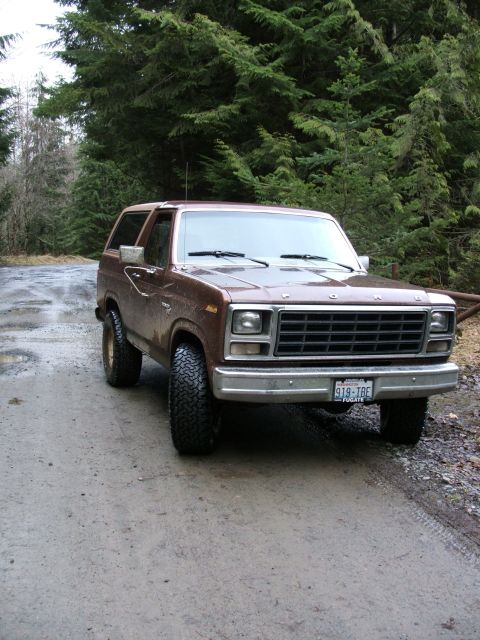
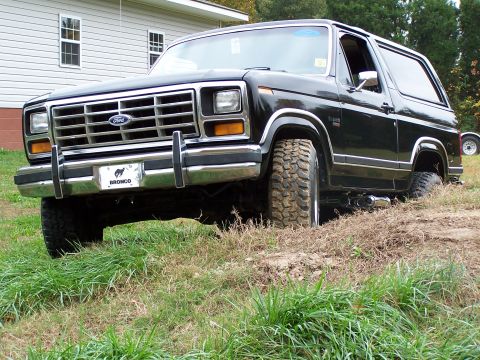
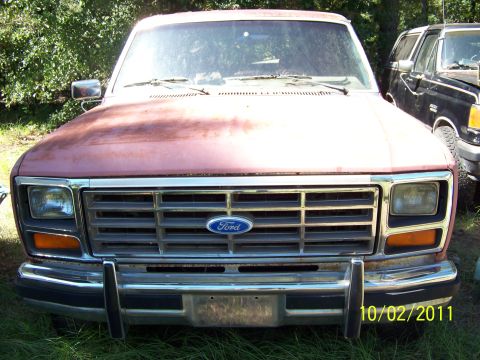
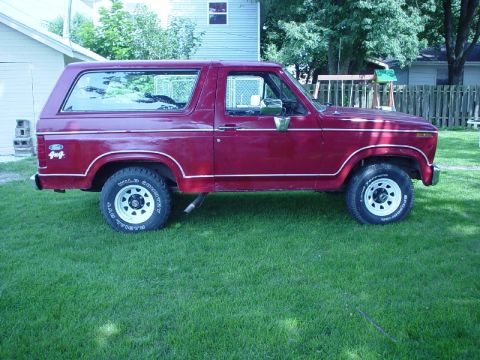
The wall · registered 1980–1986 Broncos
Sorted by depth of documentation. Click any vehicle to open its permanent record.
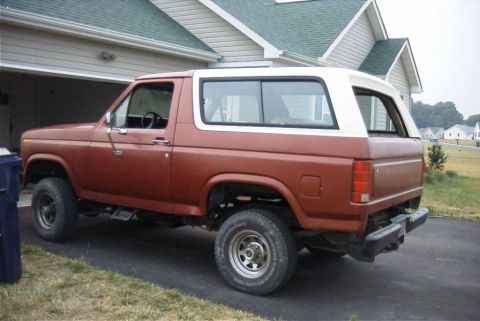
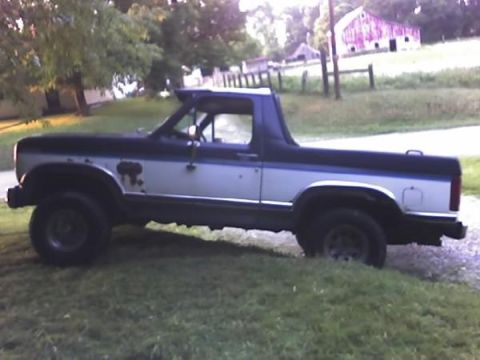
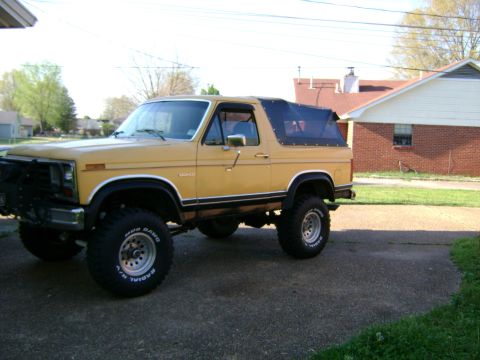
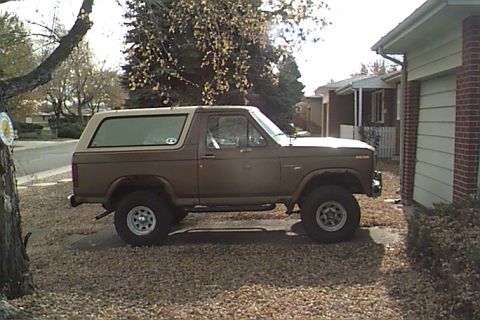
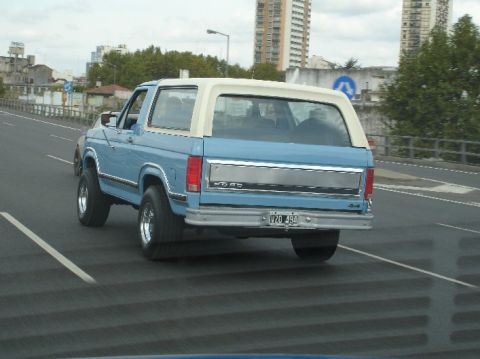
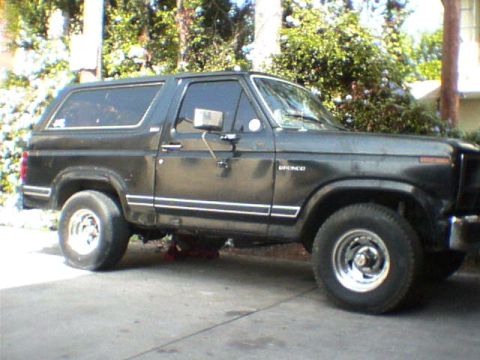
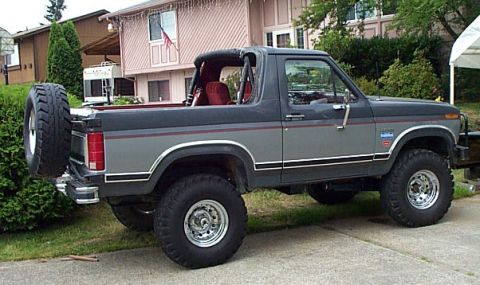
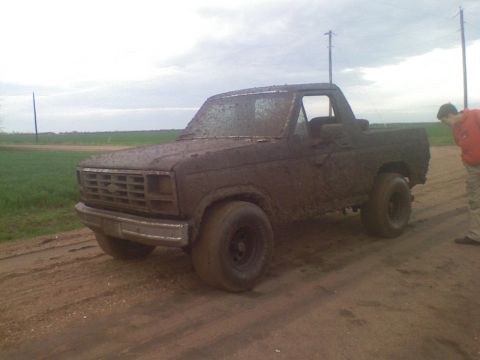
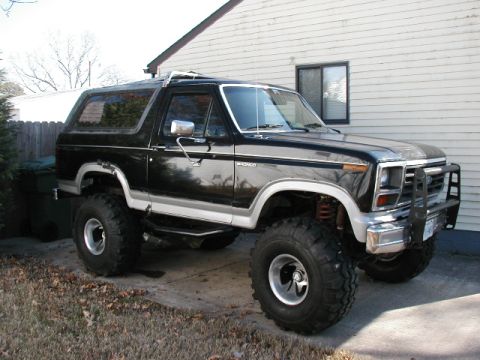
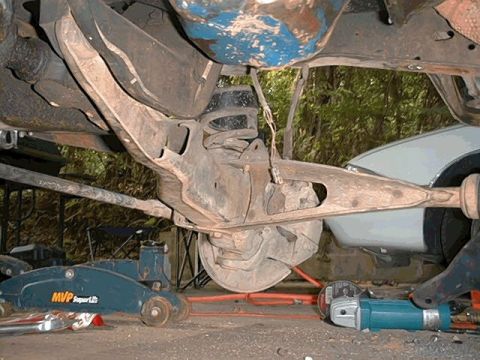
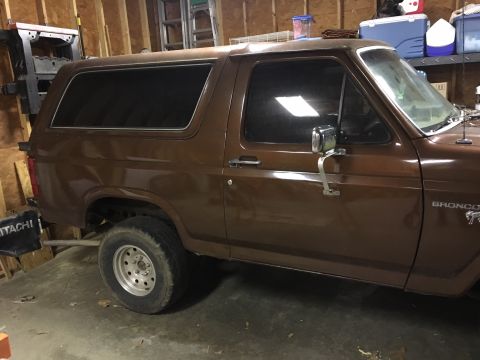
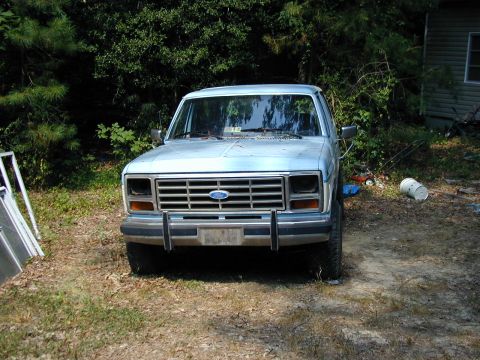
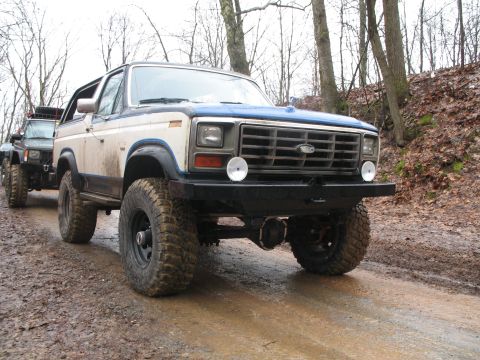
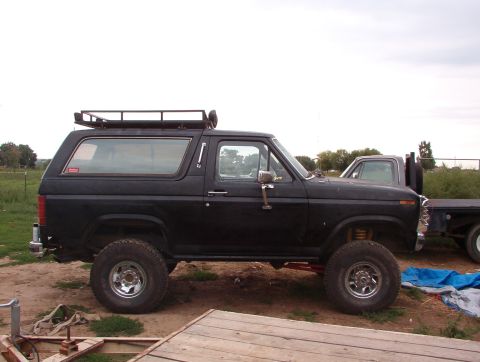
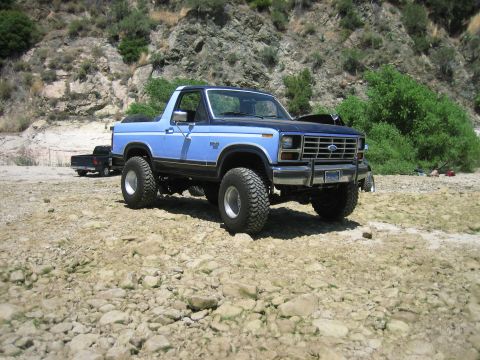
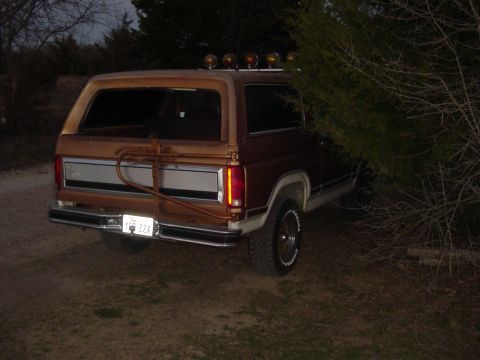
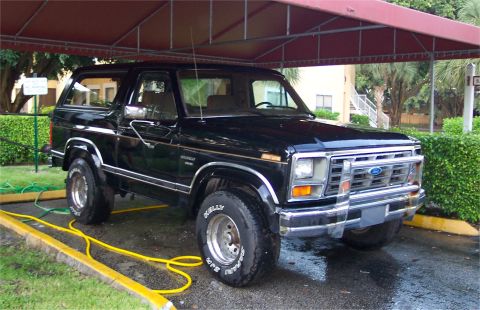
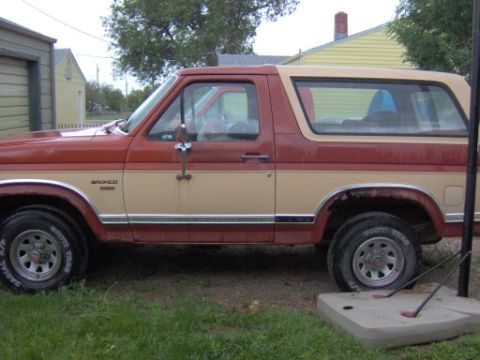
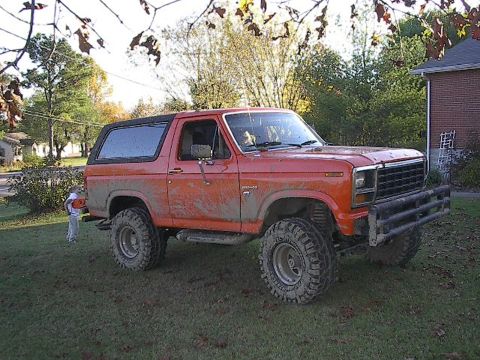
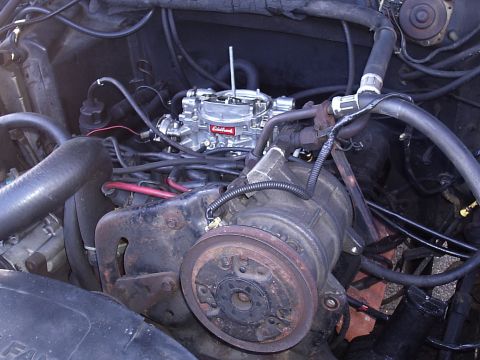
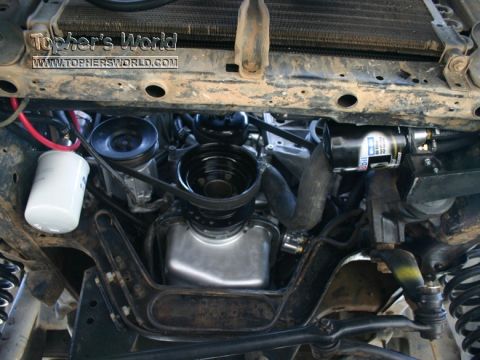
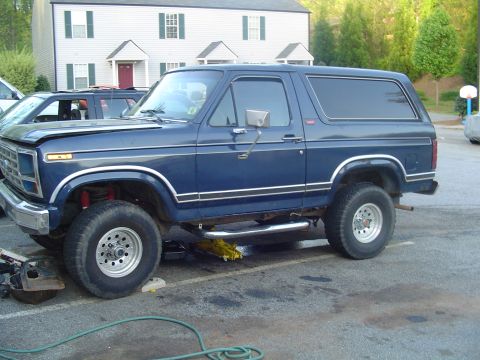
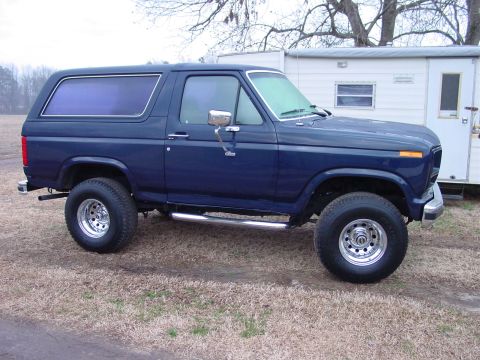
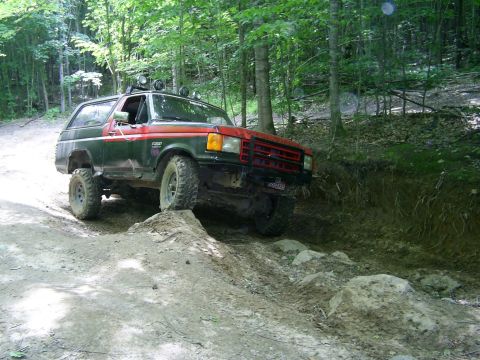
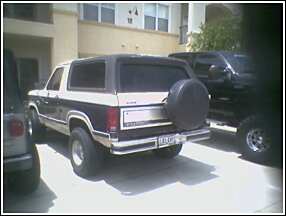
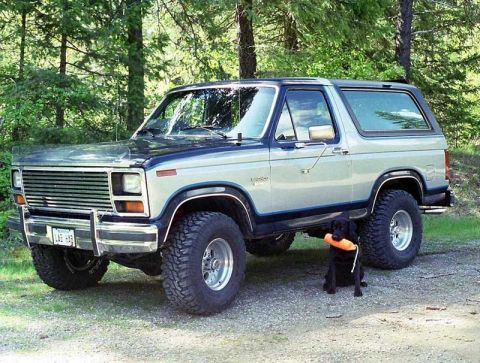
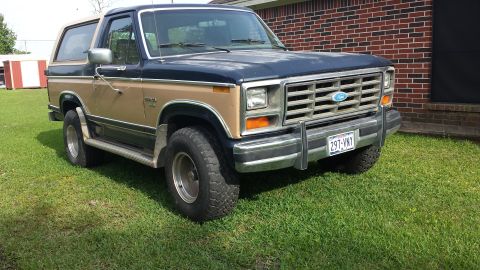
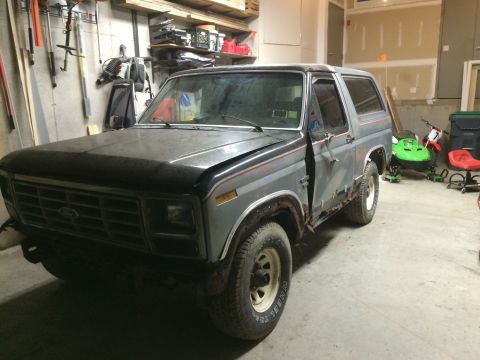
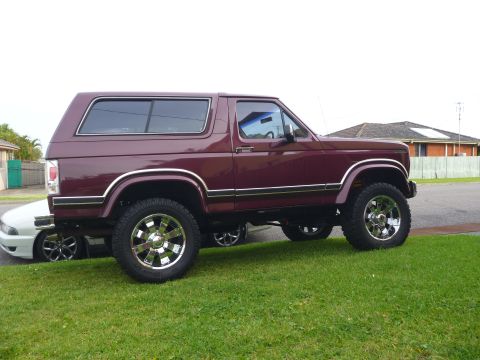
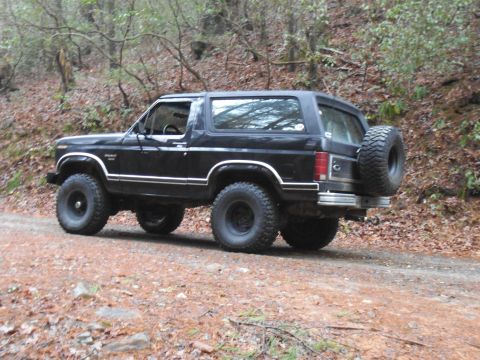
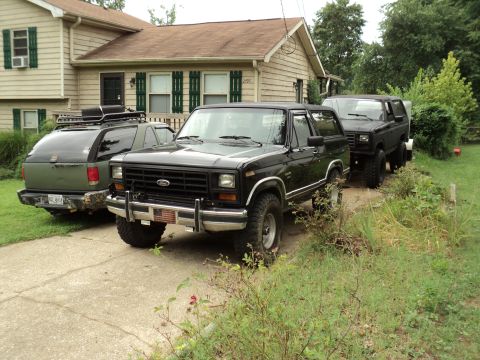
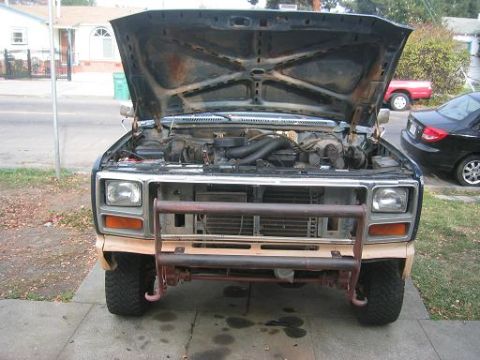
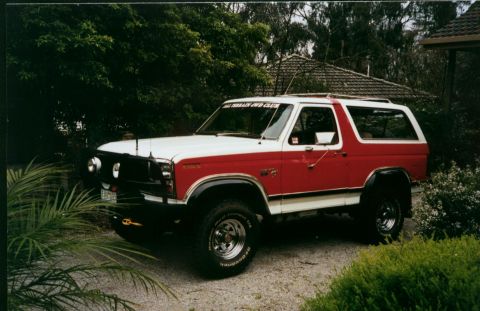
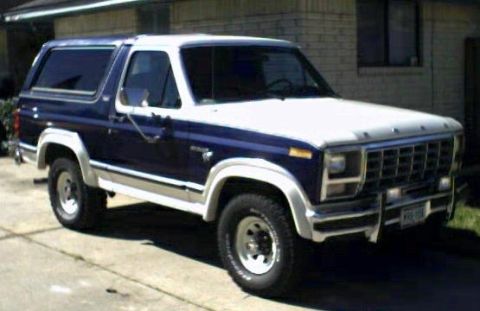
Full year-by-year change log: 1980-1986 Ford Bronco
This log tracks the model-year changes to the third-generation "Bullnose" full-size Ford Bronco (1980-1986) at the level of body, engine, fuel system, drivetrain, suspension, axle, and trim. It is assembled from Ford factory shop manuals and parts catalogs for the 1980-1986 F-series and Bronco, VIN and door data-plate decoding for engine, axle, and trim verification, period road tests and Ford sales literature, and established full-size Bronco reference works and owner registries. Where a date is genuinely uncertain, it is stated as approximate rather than pinned to a specific year.
1980
- Full redesign. The 1980 Ford Bronco opened the third generation with a complete rebody onto Ford's redesigned 1980-1986 F-series chassis, the styling generation enthusiasts call "Bullnose" for its flat, slightly forward-leaning nose and recessed grille.
- Lighter structure for fuel economy. The 1980 redesign cut weight to improve fuel economy in the wake of the 1979 energy crisis, and the early trucks were tuned with that economy priority in mind.
- Twin-Traction Beam front suspension introduced. The 1980 Bronco introduced Ford's Twin-Traction Beam (TTB) independent front suspension, which splits a Dana 44 front axle into two long swinging beams that pivot independently, sprung by coils and located by radius arms.
- Rear axle. The 1980 Bronco used a Ford 9-inch semi-floating live axle on leaf springs at the rear.
- Engines. The 1980 Bronco offered the 300 cubic-inch (4.9L) inline-six as the base engine, plus the 302 (5.0L) V8 returning as the base V8, and the optional 351M (335-series) (5.8L) V8 carried over from the prior generation. The 400 V8 was dropped after 1979.
- Body and wheelbase. The 1980 Bronco remained a two-door full-size SUV with a removable fiberglass rear hardtop over the cargo area, on a 104.7-inch wheelbase.
- Trims. The 1980 Bronco was offered in Custom and XLT trim.
1981
- Carryover refining the redesign. The 1981 Ford Bronco carried over the 1980 redesign, refining the Bullnose body and the Twin-Traction Beam front suspension rather than introducing major mechanical change.
- Continued economy focus. The 1981 Bronco kept the early-1980s emphasis on fuel economy that shaped the launch trucks.
- Drivetrain unchanged. The 1981 Bronco continued with the 300 inline-six, the 302 V8, and the optional 351M (335-series) (5.8L) V8, the TTB front with its Dana 44 axle, the Ford 9-inch semi-floating rear, and four-wheel drive through a transfer case. Some early-1982 trucks were still built from leftover 351M stock.
1982
- Optional 5.8L switches from 351M to 351 Windsor. The 1982 Ford Bronco replaced the carried-over 351M (335-series) (5.8L) V8 with the lighter 351 Windsor (5.8L), which became the top engine option for the rest of the generation. The 335-series 351M was discontinued around 1982, with the Bronco and F-series among its last homes; early-1982 trucks could still appear with leftover 351M stock.
- Front-end styling and grille emblem. The 1982 Bronco shared the revised Ford front-end styling and the Blue Oval grille emblem that arrived on the F-series in this period.
- Chassis unchanged. The 1982 Bronco kept the Twin-Traction Beam front suspension with its Dana 44 axle, the Ford 9-inch semi-floating rear, and four-wheel drive through a transfer case.
1983
- Mid-generation engine availability. The 1983 Ford Bronco carried the 300 inline-six and the 302 and 351 (5.8L) Windsor V8s on the Bullnose body with Twin-Traction Beam front suspension.
- 351 High Output. A 351 High Output (HO) version of the 5.8L Windsor appeared around the mid-1980s; the exact introduction year is not firmly established, so it is noted here as a mid-decade addition rather than pinned to 1983.
- Transmissions. The 1983 Bronco offered manual and automatic transmissions feeding a transfer case for four-wheel drive, with the Dana 44 front axle and Ford 9-inch semi-floating rear unchanged.
1984
- Carryover full-size truck. The 1984 Ford Bronco continued the third-generation full-size truck on the Bullnose body and Twin-Traction Beam front suspension with no major mechanical change.
- Separate compact Bronco II launched. The 1984 model year is when the separate compact Bronco II launched on the Ford Ranger platform with a V6; it is a different, smaller model and not this full-size Bronco.
- Drivetrain unchanged. The 1984 Bronco kept the 300 inline-six and the 302 and 351 V8s, the Dana 44 TTB front, the Ford 9-inch semi-floating rear, and four-wheel drive through a transfer case.
1985
- Eddie Bauer trim introduced. The 1985 Ford Bronco added the Eddie Bauer trim package, bringing two-tone paint and upgraded interior trim above the Custom and XLT levels.
- 5.0L gains throttle-body fuel injection. Around the 1985 model year the 5.0L (302) V8 adopted Ford throttle-body fuel injection (CFI), the same direction the F-series trucks were heading.
- 5.8L stays carbureted. The 1985 Bronco's 5.8L (351 Windsor) V8 remained carbureted while the 5.0L moved to CFI.
- Chassis unchanged. The 1985 Bronco kept the Bullnose body, the Twin-Traction Beam front with its Dana 44 axle, the Ford 9-inch semi-floating rear, and the 300 inline-six as the base engine.
1986
- Final Bullnose year. The 1986 Ford Bronco was the last model year of the third-generation Bullnose body before the 1987 fourth-generation "Bricknose" redesign.
- Fuel system carried over. The 1986 Bronco's 5.0L (302) V8 ran throttle-body fuel injection (CFI), while the 5.8L (351 Windsor) remained carbureted; the 5.8L did not get EFI until the following 1987-1991 trucks.
- Engines and chassis. The 1986 Bronco kept the 300 inline-six as the base engine, offered the 302 and 351 V8s, and retained the Twin-Traction Beam front suspension with its Dana 44 axle and four-wheel drive through a transfer case.
- Rear axle transition begins. The Ford 9-inch semi-floating live axle remained the primary rear axle through most of the 1980-1986 run, but around 1986 Ford began phasing in the smaller, lighter Ford 8.8-inch rear axle across its half-ton trucks; the 8.8-inch then became the standard rear axle for the following 1987 generation.